Edition 7: Your Deferred-Service Follow-Up Is Too Fast.
Not because you shouldn't follow up.
Because you're probably following up without understanding why the customer said no.
I hear a lot of conversations in Fixed Operations about follow-up cadence.
"Call them sooner."
"Don't let the customer get away."
"Follow up within 24 hours."
"Get them back in the door."
I understand the thinking. We all want to recover deferred revenue. But here's where I think we sometimes get it wrong: we start measuring the speed of the follow-up before understanding the reason for the deferral. And those are two completely different things.
Satisfaction follow-up is different from deferred-work follow-up
After a service visit, I believe strongly in a timely customer-satisfaction touchpoint. 24–48 hours is a reasonable window to make sure the guest is satisfied, the vehicle is performing as expected, and the experience met expectations. That's relationship management.
But deferred service is different. The customer has already made a decision. They were presented with a recommendation. They understood the need. And they said: "Not today."
That doesn't necessarily mean "Never."
So why would we automatically treat the next phone call like we're trying to close a sale?
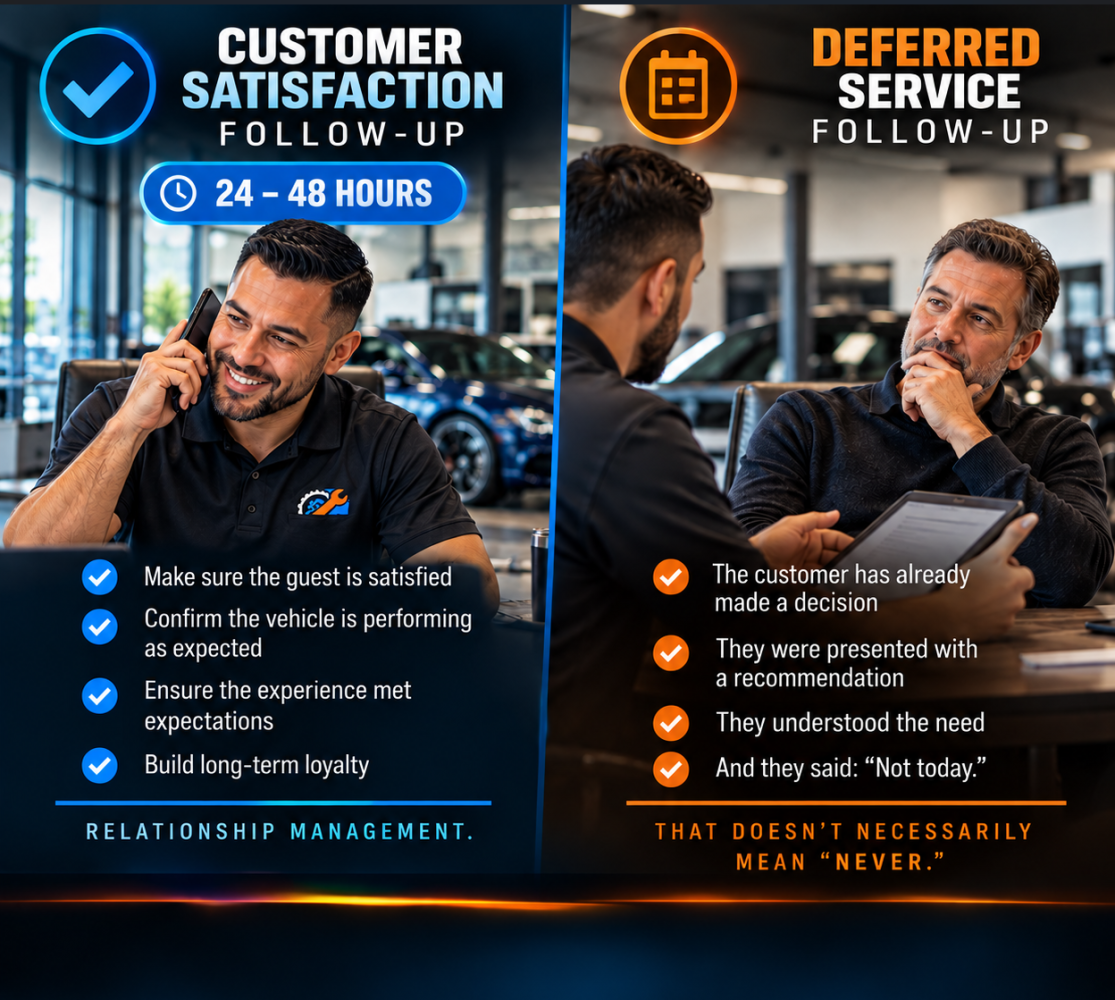
After a service visit, I believe strongly in a timely customer-satisfaction touchpoint.
Deferred work isn't one category
This is where the conversation needs to become more sophisticated.
A customer declining a $10,000 repair isn't necessarily the same as a customer declining a $300 maintenance item. A customer declining brakes because they're not financially prepared is different from someone saying, "I'm going to wait until my next service." And that's different from, "I don't think I need it." And that's different from, "I'm selling the vehicle."
Those are four different customer situations. Yet too often we put all four into the same CRM bucket: DEFERRED. Then we apply the same follow-up cadence to all of them.
That's not personalization. That's automation.
Safety determines urgency
There are recommendations that deserve immediate attention. Brake concerns. Tire safety. Critical fluid leaks. Overheating. Warning lights. Items that could potentially affect the safe operation of the vehicle. Those deserve a different cadence.
In those situations, I'm not worried about whether we're being "too aggressive." I'm worried about the customer. The conversation should be: "We want to make sure you're safe." That's completely different from: "We're calling because you still haven't approved that repair."
The urgency of the repair should influence the urgency of the follow-up.
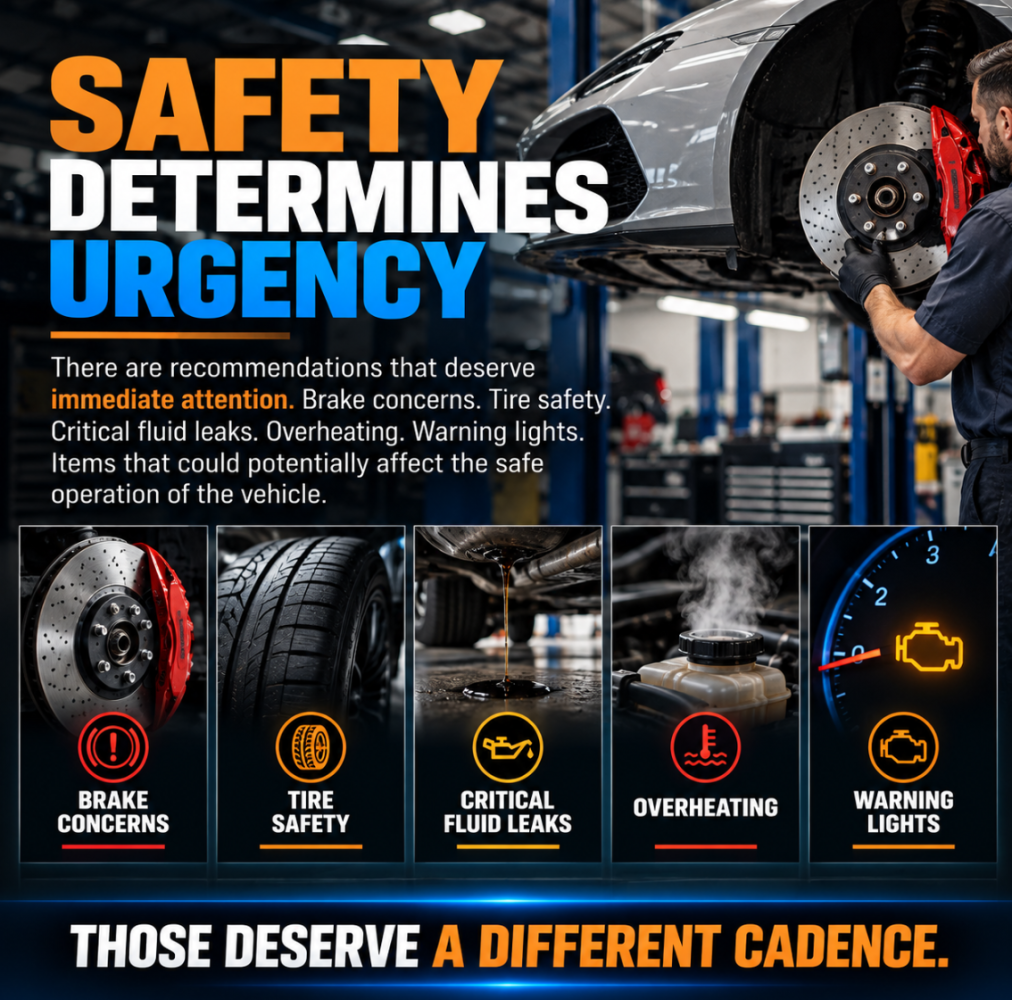
The urgency of the repair should influence the urgency of the follow-up.
Customer intent determines cadence
This is the part I think we need to talk about more in Fixed Operations. Before deciding when to follow up, determine why the customer deferred.
Was it price? Timing? Lack of urgency? Vehicle ownership uncertainty? Waiting for another repair? Travel? Cash flow? Or simply, "I want to think about it."
The reason matters. Because the follow-up should be built around the customer's reason — not our desire to increase this month's revenue.
Sometimes the best thing an advisor can say is: "Absolutely. I'll make a note of it, and we'll revisit it at the right time." That's not losing the sale. That's building trust.
Ultra-luxury guests require relationship-based follow-up, not transactional chasing
This becomes even more important when you're dealing with ultra-luxury and performance vehicles. Our guests are different. The vehicle may represent a significant financial investment, but the customer may also have multiple vehicles, multiple priorities, and a completely different purchasing mindset.
They may have the ability to spend $5,000 today. That doesn't mean they want to spend $5,000 today. Affordability and willingness are not the same thing. That's an important distinction.
If we continue calling because our CRM says, "DEFERRED, FOLLOW UP," we can quickly move from being a trusted advisor to becoming a salesperson chasing an RO. And nobody wants that. Especially a luxury customer.
The goal is for the customer to think, "They are looking out for me and my vehicle." Not, "Here they go again trying to sell me something." That's the difference.
Standardize the process. Personalize the cadence.
I am a huge believer in process. We need standards. We need CRM accountability. We need follow-up tasks. We need reporting. We need KPIs. We need managers coaching the process.
But we also need to leave room for human judgment. A process should provide the framework. It shouldn't eliminate the advisor's ability to understand the guest.
That's why I believe in establishing a baseline cadence while allowing the customer, vehicle, repair, and reason for deferral to determine what happens next. For example:
Safety-related concern: Immediate / 24–72 hours / continued follow-up until addressed.
Important recommended service: 21 days / 45 days / additional lifecycle-based follow-up.
Non-urgent or convenience item: Longer-term follow-up based on customer preference, mileage, or next service opportunity.
The exact cadence can be adjusted. The principle shouldn't be. Not every customer needs the same number of calls. Not every customer needs the same message. And not every customer needs to be contacted on the same day.
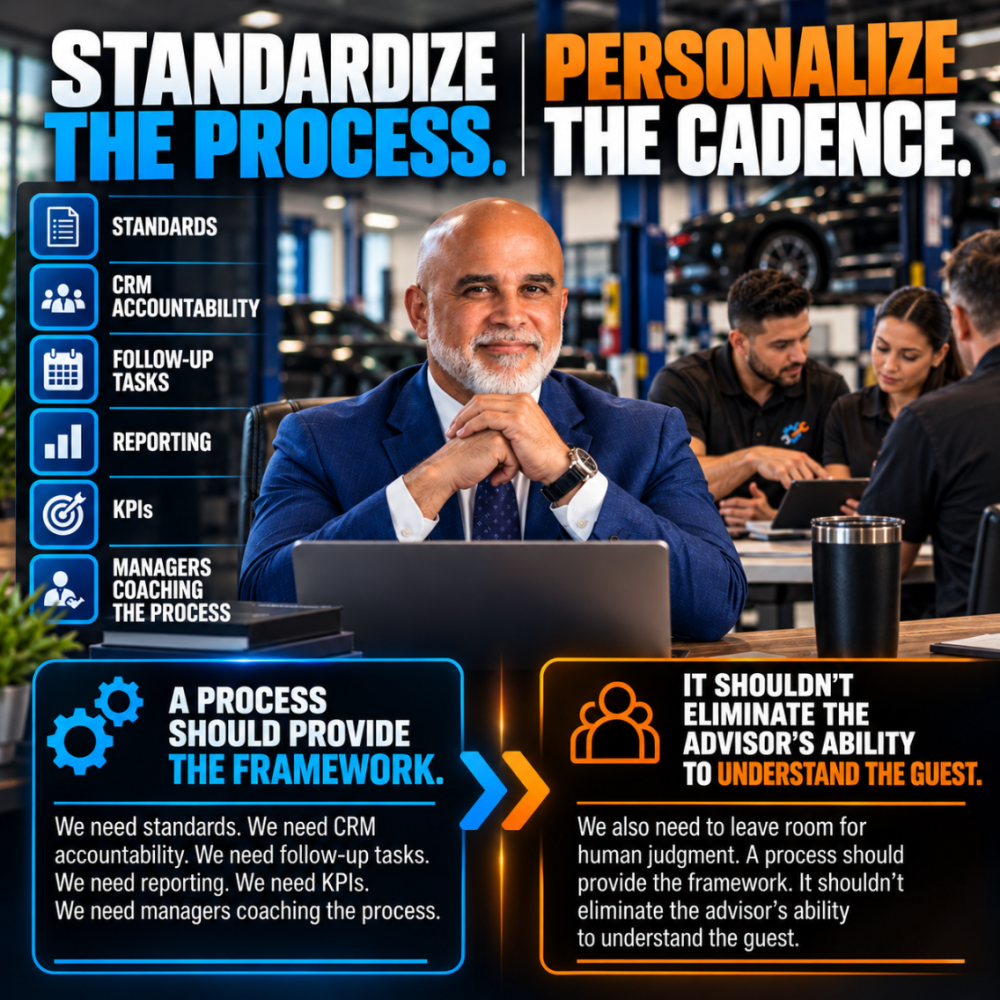
But we also need to leave room for human judgment. A process should provide the framework. It shouldn't eliminate the advisor's ability to understand the guest.
The Theory of Thirds
I've always believed that when a customer says no, we have to understand that not every "no" has the same outcome. Some customers will never return for the work. Some will return later. And some can be recovered through the right relationship and the right follow-up.
That's why I don't believe the answer is simply, "Follow up sooner." The better question is, "What does this customer need from us next?"
That is a much harder question. But it's also a much better one. Because we're not just managing deferred revenue. We're managing customer relationships.
The numbers still matter
Let's be clear. I'm not suggesting we stop measuring deferred service. Quite the opposite.
Track it. Measure it. Coach it. Report it. Know your recovery rate. Know your dollars deferred. Know your dollars recovered. Know which advisors are effective at recovering deferred work. Know which categories of recommendations are being deferred. Know why customers are saying no.
What gets measured gets managed. But don't let the KPI become more important than the customer behind it. Because the purpose of our process isn't to make the CRM look good. It's to make the customer experience better and the relationship stronger. And when we do that correctly, revenue follows.
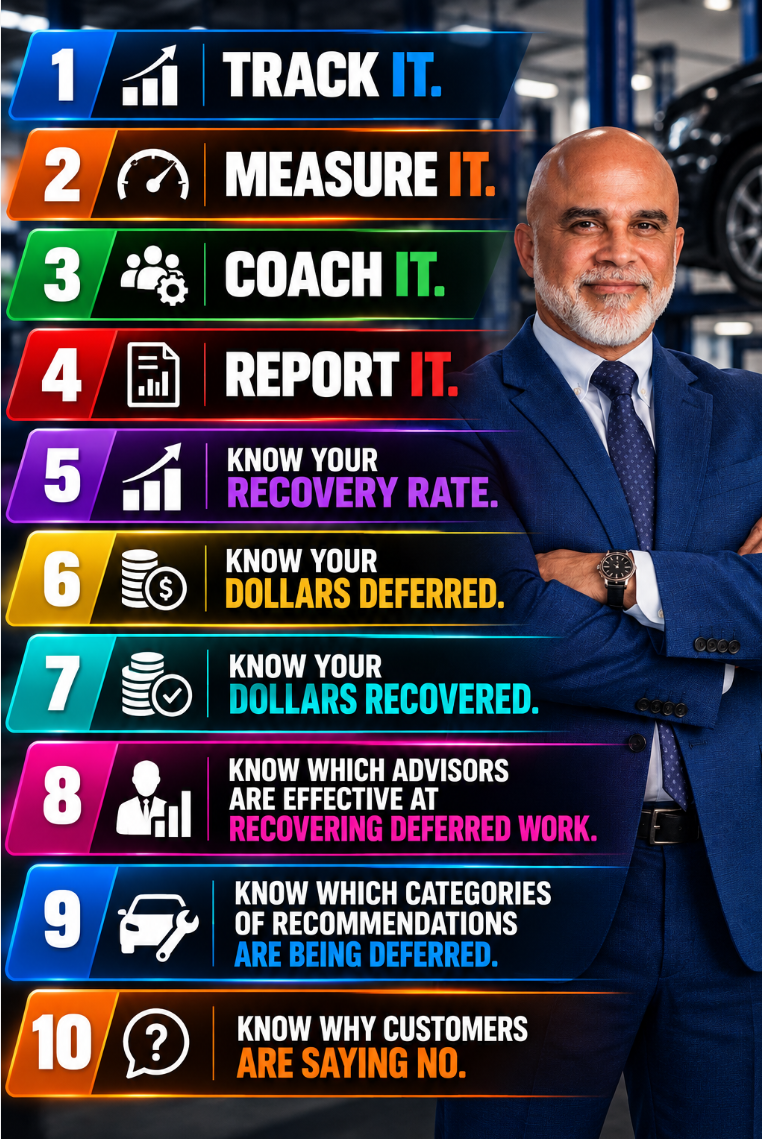
Follow-up vs. relationship management
This is where I believe Fixed Operations is headed.
The old model says, "How quickly can we get them back?" The better model asks, "When is the right time to engage this particular customer?"
The old model says, "How many follow-up attempts did we make?" The better model asks, "Did our follow-up add value?"
The old model says, "The customer declined the repair." The better model says, "The customer deferred the repair. Now let's understand why."
That is a completely different mindset. And it changes how we coach advisors. It changes how we use our CRM. It changes how we measure follow-up. And ultimately, it changes how customers view our dealership.
The objective isn't to contact the customer as many times as possible. The objective is to contact them at the right time, with the right message, for the right reason. That's the difference between follow-up and relationship management.
Because our goal isn't to become the dealership that calls the most. Our goal is to become the dealership the customer trusts the most.
Standardize the process. Personalize the engagement. Earn the relationship. And let the revenue follow.
— Steve