The Twenty Questions Behind Every Strong 1:1 in Fixed Ops.
Welcome back.
Last edition, I laid out the KPI Command Center, the four pillars and roughly fifteen metrics I use to run a department on levers instead of outcomes. If you missed it, that one's worth reading first, since a lot of what follows builds on the same instinct: measure the right thing, and the results take care of themselves.
This edition is about a different kind of measurement, not metrics, but questions. Specifically, the twenty questions I actually ask my own team, organized around the same four-pillar structure: the work itself, what drives your people, how connected the team is, and whether you're building real momentum or just staying busy.
The best fixed ops leader I know doesn't have all the answers. He knows exactly which questions to ask, and he asks them on purpose, every single week. It's asking the right questions and doing something with what comes back.
The Work
How work actually gets done on your drive, not how you think it gets done.
What does excellence look like here?
How do we know when we've won?
What are our three most critical priorities?
Where do you consistently get stuck?
Which processes feel like a waste of time?
Here's what you're actually listening for. Can this person clearly define great work, or do they shrug and say "I don't know, doing a good job I guess"? Will they name something inefficient, or do they just live with it because that's how it's always been done? And can they separate what's urgent from what's actually important, because on a busy drive, everything feels urgent, and that's exactly the problem.
Focused clarity outperforms individual effort. An advisor who knows exactly what excellence looks like will outperform someone working twice as hard with no target.

Focused clarity outperforms individual effort.
Engagement
What drives your people. This is the pillar most leaders skip, because it feels soft. It's not. It's the one most directly tied to whether you keep your best people.
What kind of work energizes you?
How do you like to receive feedback?
What capability do you most want to build?
When have you felt most proud of your work?
Where do you want to be in eighteen months?
What you're listening for: are they actively seeking to improve, or coasting on autopilot? Are they driving their own growth, or waiting for you to hand them a plan? And the one that matters most, do they make everyone around them better, or are they optimizing only for themselves?
Teams that strive together stay together. This is your retention lever, and it costs you nothing but a conversation.
This is your retention lever, and it costs you nothing but a conversation.
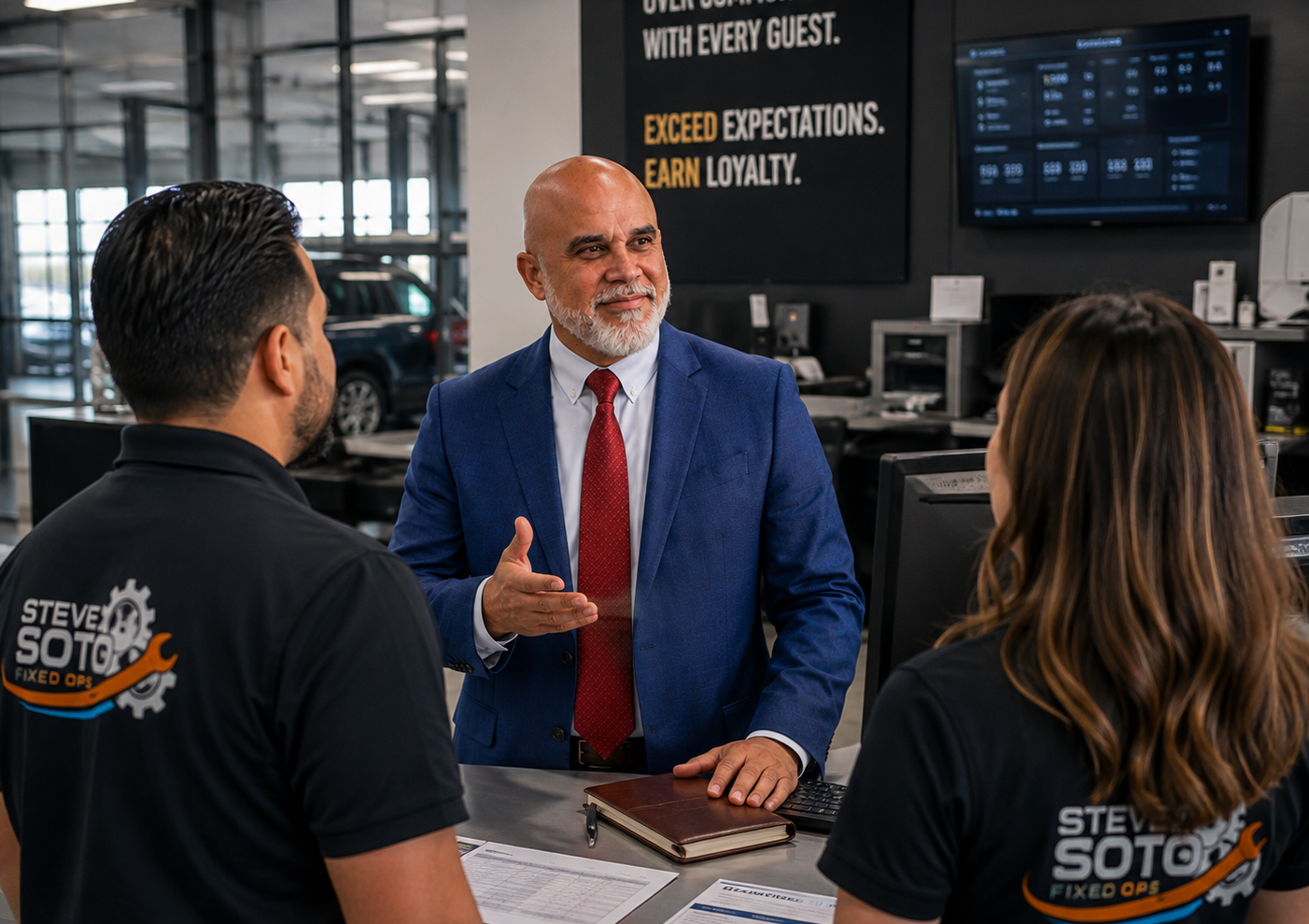
This is your retention lever, and it costs you nothing but a conversation.
Alignment
How connected your team actually is, to the mission, to each other, to what's really happening on the drive day to day.
How does your work connect to our mission?
Where is our biggest untapped opportunity?
Where do you see friction slowing us down?
What information would make you more effective?
What should we stop doing immediately?
What you're listening for: will this person confront an uncomfortable truth, or tell you what they think you want to hear? Do they see beyond their own to-do list, or is their world exactly as big as their own RO count? Can they actually spot what's holding the whole team back, not just their own piece of it?
Teams that stay connected cover more ground, faster. Misalignment is slow and invisible until it isn't, and it always shows up in the numbers eventually.
Momentum
Are you actually improving, or are you just busy?
What's our most meaningful improvement today, this week, this quarter?
Where are we consistently falling short?
What problems keep coming back?
Which recent changes made the biggest difference?
What one change would unlock the most progress?
What you're listening for: do they harvest lessons from wins, or move on the second something works without asking why it worked? Can they diagnose a systemic issue, or do they only patch the symptom in front of them? Will they handle a risk proactively, or wait until it's already a fire on the drive?
Teams that ask why compound their results. That's the difference between a department that improves every week, every month, every quarter and one that just survives each one.
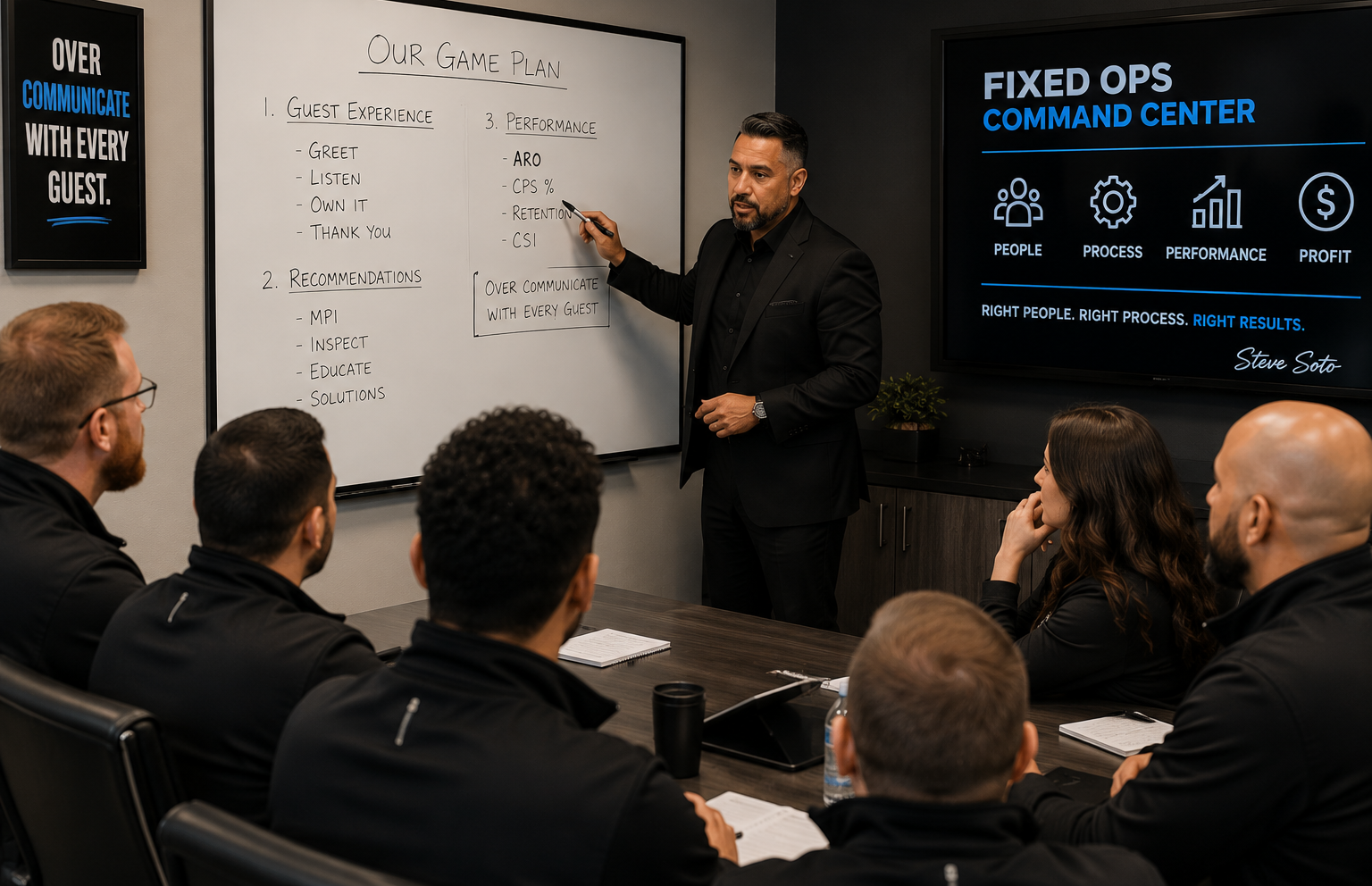
Teams that ask why compound their results.
The Part That Actually Matters
The secret isn't in asking the questions. It's in what you do with the answers. Great questions surface the truth. Great leaders act on it.
If you're an advisor reading this, bring the honest answer to your next 1:1, not the safe one.
If you're a service manager or director, pick five, one from each pillar plus a bonus, and run them in your next team meeting this week. Don't ask all twenty at once. Start small and actually listen.
And if you're a GM or dealer principal evaluating fixed ops leadership talent, this is the operating system I run my department on. Not slogans. A system.
Next edition, I'm walking through the objections framework I use on the drive, Price, Time, Trust, Convenience, and the Theory of Thirds. If you've ever had a service advisor freeze up in front of a customer who says "that's too expensive," that one's for you.
— Steve