The Revenue Already Sitting in Your CRM - Fact.
Every declined recommendation your team has ever made is still sitting somewhere. A brake pad photographed at 2mm. A serpentine belt showing visible cracking on video. A fluid sample flagged and never addressed. None of that disappeared when the customer said, "not today." It's sitting in your CRM right now, documented, photographed, dated, and mostly untouched.
Most departments treat a decline like a closed door. Customer said no, advisor moves to the next RO, everyone moves on. That's one of the most expensive habits in this industry, because a decline isn't a closed door. It's a data point. You already found the problem. You already photographed the proof. The only thing missing is a system that goes back for it.
Why "No" Isn't the End of the Story
Not every declined customer is the same kind of "no," and treating them all identically is where most recovery systems fail before they start.
Roughly a third of your customers will say yes with minimal persuasion when the timing is right, they just weren't ready in that exact moment. A third genuinely need to see the value case again, made clearly, before they'll act. And a third were never converting that day regardless of what was said, because the decision was never really about the pitch.
The mistake most departments make is spending their limited follow-up energy chasing that last group, while the middle third, the ones who'd say yes with the right follow-up, get no call at all. That middle third is where the recovered revenue actually lives.
Run the math on just that middle third for your own store. Take your monthly volume of declined safety and reliability items, cut it to a third, and picture that group with the right follow-up at the right time instead of no follow-up at all. That's not a rounding error sitting in the CRM. It's closer to a phantom RO count nobody's chasing, and the number gets real fast once you run your own volume against it instead of somebody else's.

Roughly a third of your customers will say yes with minimal persuasion when the timing is right, they just weren't ready in that exact moment.
The Metric Everyone Tracks, and the Two Nobody Does
Ask most service managers about their MPI numbers and they'll tell you their completion rate, maybe their attachment rate, how often a photo or video actually got taken. Those numbers matter, but they only tell you the documentation happened. They don't tell you whether the documentation ever did anything.
Two numbers matter more, and almost nobody tracks either one:
MPI open rate and video view rate. Did the guest actually open what was sent, and did they watch it? A technician can shoot a photo and record a video on every single car, and none of it moves anything if the guest never sees it. Completion tells you the work got documented. Open rate and view rate tell you whether the proof actually landed.
Appointment show rate on recovered work. When you do go back for that declined recommendation, does the guest actually show up for the appointment, or does it quietly get rescheduled into nothing? A guest who trusted what they saw the first time is a guest who shows up the second time. If your show rate is soft on this specific list, that's a trust gap from the original visit still playing out, not a scheduling problem.
Most of the industry isn't tracking this because most DMS and CRM platforms weren't built to answer it. They'll confirm an MPI was created and a video was attached. They won't tell you if it was opened, watched to completion, or ignored entirely, that data usually lives in whichever video or texting platform you use, sitting separately from the CRM's follow-up list. If nobody's pulling both sources and cross-referencing them, the gap stays invisible by default. That's a tooling and visibility problem before it's ever a people problem.
Here's why this matters for the CRM list specifically: attachment rate tells you the list exists. Open rate and view rate tell you which names on that list are worth calling first, because they're the guests who already engaged with the proof once. A guest who opened the video and watched the whole thing is a warmer call than one who never opened it at all, and most departments call the entire list with the same generic script, instead of prioritizing by who already paid attention.
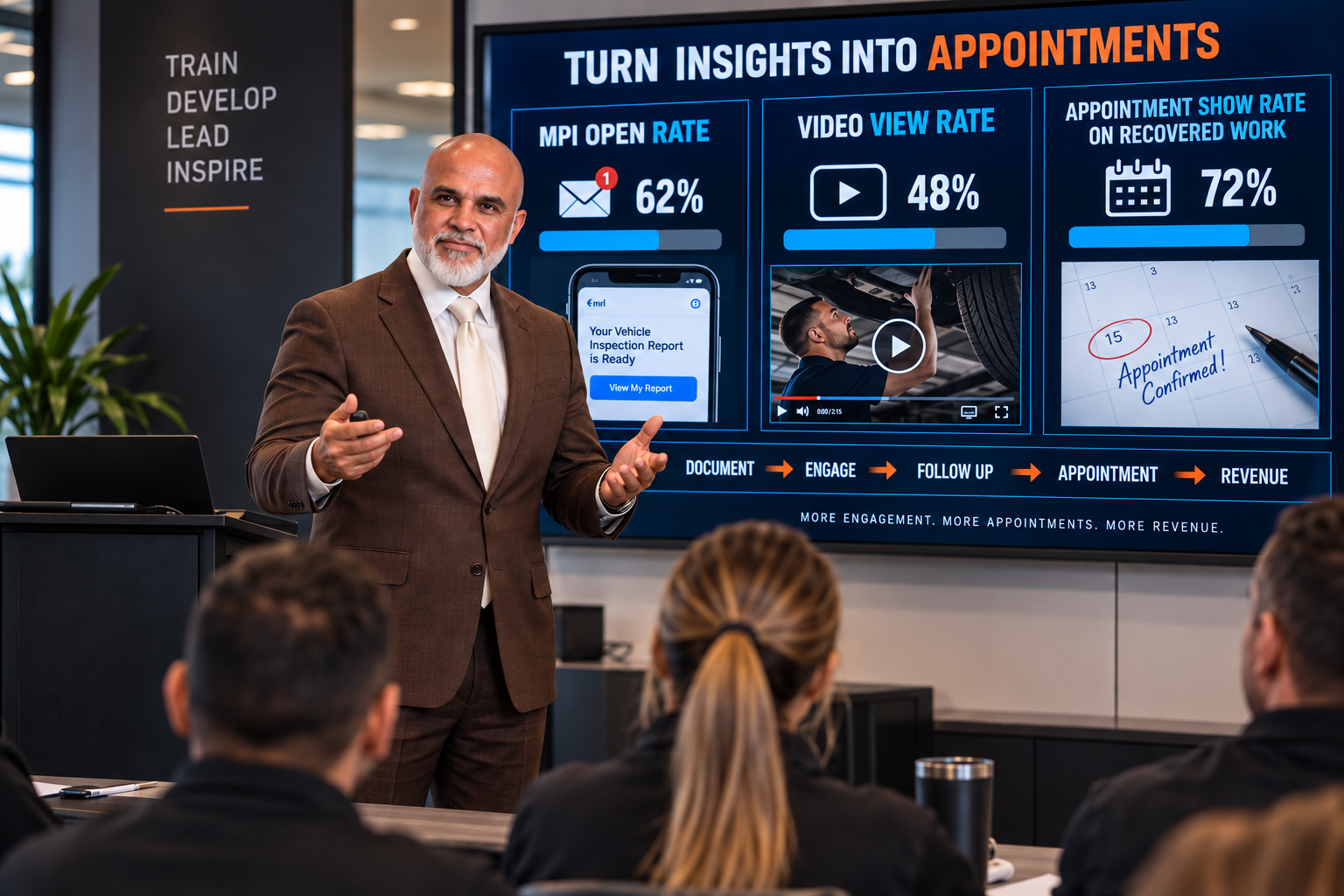
Open rate and view rate tell you which names on that list are worth calling first, because they're the guests who already engaged with the proof once.
What to Actually Do with the List
A CRM full of declined recommendations isn't a cold call list. It's a warm one, if you use what you already know.
Segment by engagement, not just by age. A decline from three weeks ago where the guest watched the full video is a better call today than a decline from last week where the guest never opened it.
Reference the specific thing they saw. "Just checking in" converts far worse than "I wanted to follow up on the brake pad video you watched last month." Specificity is what makes the second conversation feel like a continuation, not a sales call.
Time it deliberately. A 30-to-60-day follow-up window on safety and reliability items, before the issue either resolves itself into a bigger repair or gets fixed somewhere else.
Assign clear ownership. Decide up front whether this list belongs to the advisor who wrote the original RO, a dedicated BDC lane, or both. A list everyone's responsible for is a list nobody actually works.
Script the callback instead of improvising it. The person making the call should have the original photo or video pulled up before dialing, not searching for it mid-conversation. That's the difference between a follow-up that sounds prepared and one that sounds like a form letter.
Track the appointment through to completion, not just to the booking. A booked appointment that no-shows isn't recovered revenue. It's just a longer list.
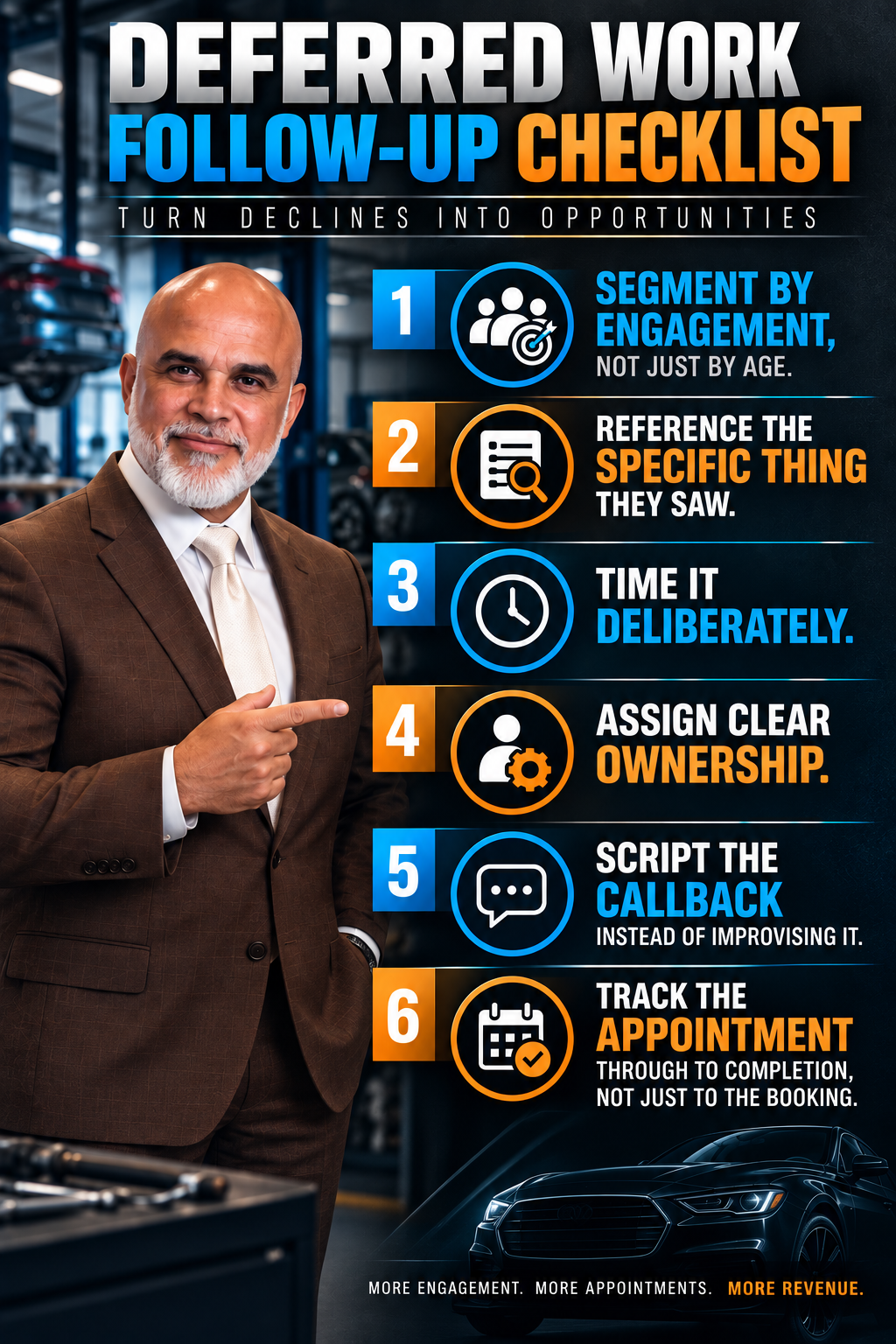
A CRM full of declined recommendations isn't a cold call list. It's a warm one, if you use what you already know.
Where This Usually Breaks Down
Even departments that build this list well tend to lose it in the same two places.
The first is staleness. A declined-work list that only gets touched once, right after the visit, is really just a slightly delayed version of the same closed-door habit, the follow-up happened, it didn't convert that day, and then it sat exactly as untouched as before. The system only works if the list gets worked on a cadence, not run through once and filed away.
The second is ownership drift. The list gets built, someone runs it hard for a month, results are good, and then that person gets pulled onto something else and the list quietly stops moving. That's not a motivation problem. It's a systems problem. If the list depends on one person remembering to run it, it isn't a system yet, it has to be built into someone's job description and someone's weekly numbers, not treated as a side project for whoever has time.
The Technician Side Nobody Talks About
There's a second effect of tracking open rate and view rate that has nothing to do with revenue directly: it changes how technicians see their own effort.
A technician who spends an extra fifteen seconds explaining what the camera is showing, narrating instead of silently filming, is doing real work that's easy to dismiss as optional. When that technician can see that their specific video got watched and turned into an approved repair three weeks later, the fifteen seconds stops feeling like busywork. It starts feeling like the reason the job got sold. That's not a soft engagement point; it's the difference between a team that treats video documentation as a checkbox and one that treats it as the actual selling tool it is.
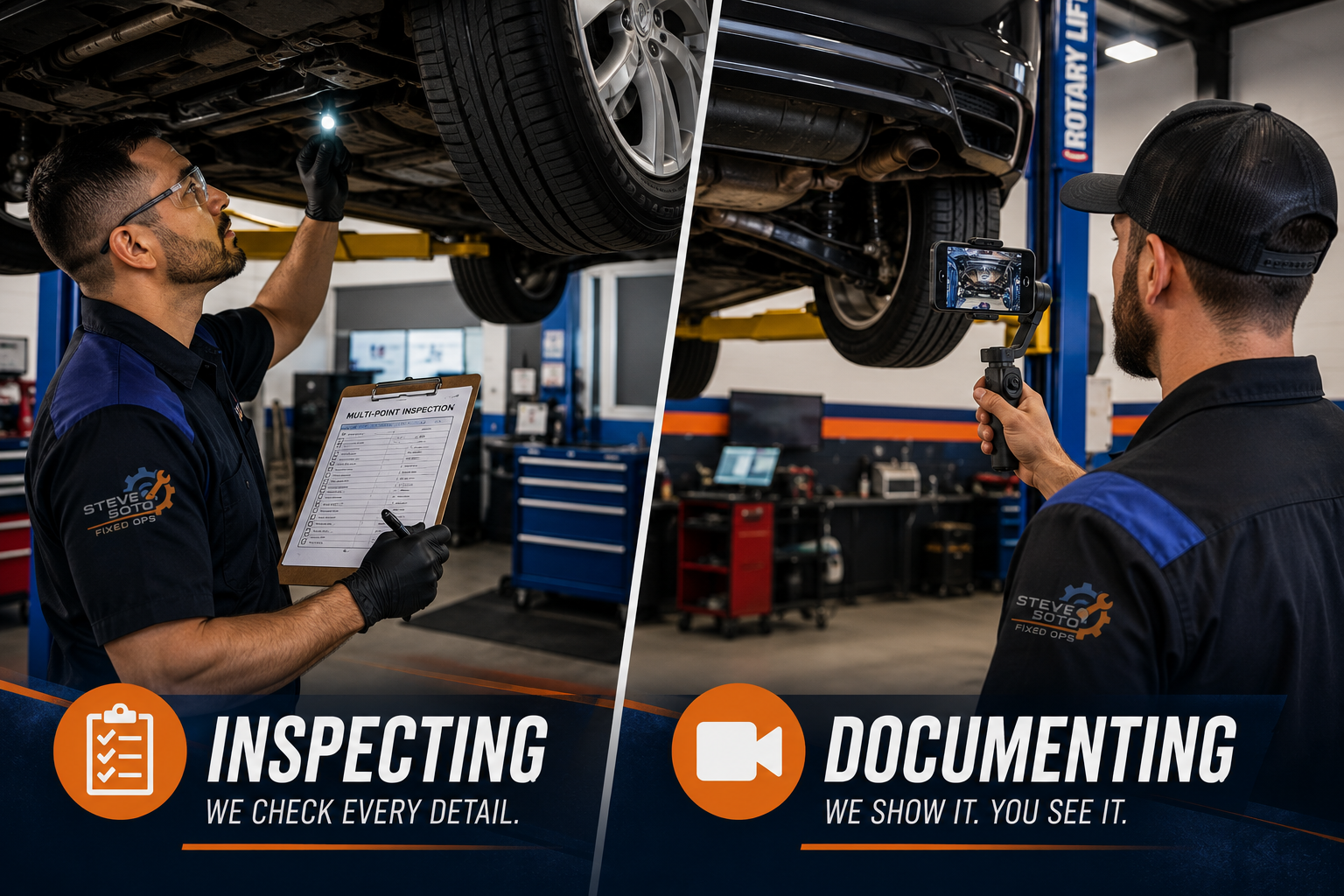
A technician who spends an extra fifteen seconds explaining what the camera is showing, narrating instead of silently filming, is doing real work that's easy to dismiss as optional.
Putting It Together
The revenue in your CRM was never actually lost. It was documented, photographed, and then left alone. Recovering it isn't about better cold calling. It's about building the system that tells you exactly which declines are worth calling first, exactly what to say when you do, and exactly whether the whole loop, from photo, to view, to appointment, to completion, is actually closing.
If you're an advisor or technician, this is why the extra fifteen seconds on camera is worth it, it's the reason the follow-up call two weeks later actually lands. If you're a fixed ops director or GM sizing up whether your CRM is doing its job, this is the audit worth running before spending another dollar bringing in new traffic you haven't finished converting from the traffic you already had.
Pull your MPI attachment rate. Then pull open rate and view rate. Then pull show rate on the recovered appointments. If any one of those three numbers is a mystery in your store right now, that's not a follow-up problem. That's a visibility problem, and it's costing you revenue you already found once. See you on the next one. The "Fixed Ops Decade".
-Steve